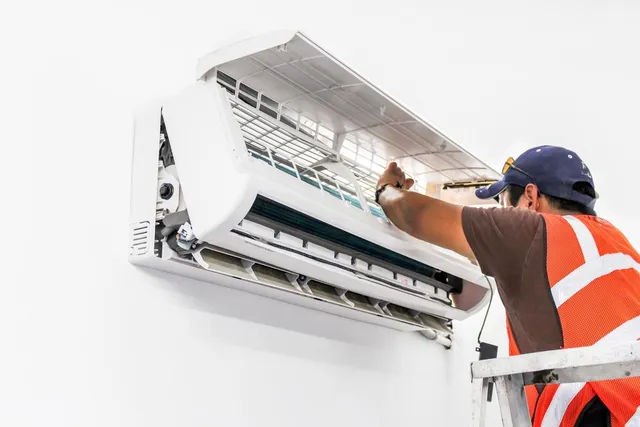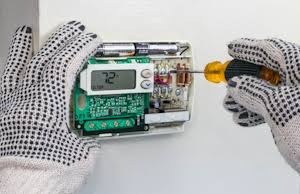
Your thermostat may be one of the smallest components in your HVAC system, but it plays a major role in maintaining indoor comfort. It communicates temperature settings to the heating and cooling equipment, helping determine when the system should start, stop, or adjust its operation.
When a thermostat is inaccurate, poorly configured, outdated, or malfunctioning, the entire HVAC system can appear to have performance problems. Professional Thermostat Service can help homeowners and businesses diagnose control issues, improve temperature management, and determine whether an upgrade to modern thermostat technology makes sense.
In 2026, smart thermostats and connected HVAC controls are making temperature management more convenient, but proper installation, configuration, and maintenance remain essential.
An HVAC system depends on accurate signals from its control system. If a thermostat does not accurately detect indoor temperature or communicate properly with the equipment, the system may not operate as expected.
Thermostat problems can contribute to:
Because these symptoms can also result from other HVAC problems, professional diagnosis is important before replacing the thermostat unnecessarily.
Professional Thermostat Service involves inspecting the thermostat and its connection to the HVAC system. The goal is to determine whether the control is operating correctly and communicating properly with the equipment.
Depending on the system, a technician may:
The appropriate service depends on the type of thermostat and HVAC equipment installed.
Homeowners may not immediately realize that the thermostat is responsible for an HVAC issue. Several warning signs can indicate that the control deserves professional attention.
If the thermostat displays a temperature that seems significantly different from the actual room conditions, its sensor or placement may need evaluation.
A thermostat that fails to communicate with the HVAC equipment may prevent the system from starting or stopping correctly.
If the air conditioner or heater repeatedly turns on and off, the cause could involve the thermostat, equipment sizing, airflow, or another HVAC component.
Rooms that remain too warm or too cool may indicate thermostat placement issues, zoning problems, airflow restrictions, or equipment concerns.
Even a properly functioning thermostat can provide inaccurate readings if it is installed in an unsuitable location.
For example, placing a thermostat near a heat-producing appliance, direct sunlight, a draft, or another unusual temperature source can affect the reading.
Professional installation can help determine an appropriate location that better represents the typical indoor conditions of the property.
Traditional programmable thermostats can provide scheduled temperature adjustments, while smart thermostats offer additional connected features.
Depending on the model, smart thermostats may provide:
These capabilities can give homeowners greater control over their HVAC systems.
However, the benefits depend on proper compatibility, installation, configuration, and system operation.
A thermostat does not create HVAC efficiency by itself, but appropriate temperature settings and reliable system control can contribute to efficient operation.
A thermostat that is incorrectly configured or malfunctioning may cause the HVAC system to run unnecessarily or fail to maintain consistent settings.
Professional Thermostat Service can help verify that the control system is operating as intended.
Homeowners can also support efficient operation by:
Connected thermostats are becoming an important part of modern HVAC systems. Many homeowners now expect their heating and cooling equipment to integrate with smartphones and smart-home platforms.
Modern controls can help users monitor their systems and adjust temperatures remotely. Some systems can also provide alerts when unusual operating conditions occur.
For example, a homeowner may receive a notification if the HVAC system operates for an unusually long period or if a maintenance reminder is due.
These features can improve convenience and visibility, but they do not replace professional HVAC inspections.
Not every thermostat works with every HVAC system. Compatibility may depend on:
This is especially important when replacing an older thermostat with a modern smart model.
A professional can verify compatibility before installation and help configure the thermostat correctly.
Heat pumps may require different control configurations from conventional heating and cooling equipment. Some systems include auxiliary or backup heating that must be properly managed by the thermostat.
Incorrect configuration can affect comfort and system operation.
Homeowners with heat pumps should choose a thermostat designed to work with their specific equipment and have the controls professionally configured when necessary.
Thermostats also play an important role in HVAC zoning systems. A zoned property may use multiple thermostats or temperature sensors to control different areas independently.
This can provide greater flexibility for homes with:
Proper zoning design and thermostat configuration are important for achieving the intended comfort benefits.
Professional evaluation may be appropriate when:
A technician can determine whether the thermostat is actually responsible for the problem or whether another HVAC component needs attention.
When searching for Thermostat Service, choose an HVAC professional who understands both traditional and modern HVAC control systems.
Look for a provider offering:
A reliable technician should evaluate the entire system rather than assuming every temperature problem is caused by the thermostat.
The thermostat is a critical part of HVAC control, even though it is often overlooked. An inaccurate or poorly configured thermostat can affect comfort, system operation, and energy use.
Professional Thermostat Service can help property owners identify control problems, verify compatibility, improve temperature management, and take advantage of modern smart-home technology.
In 2026, connected thermostats provide more ways than ever to monitor and manage indoor comfort. However, the best results come from combining modern controls with proper installation, appropriate settings, regular HVAC maintenance, and professional service when problems arise.
A well-maintained thermostat and HVAC system can provide more consistent comfort while giving homeowners greater control over their indoor environment.

This post has been authored and published by one of our premium contributors, who are experts in their fields. They bring high-quality, well-researched content that adds significant value to our platform.








Student Advice provides useful education, study, career, and student life guidance to help learners make informed decisions and achieve their goals.