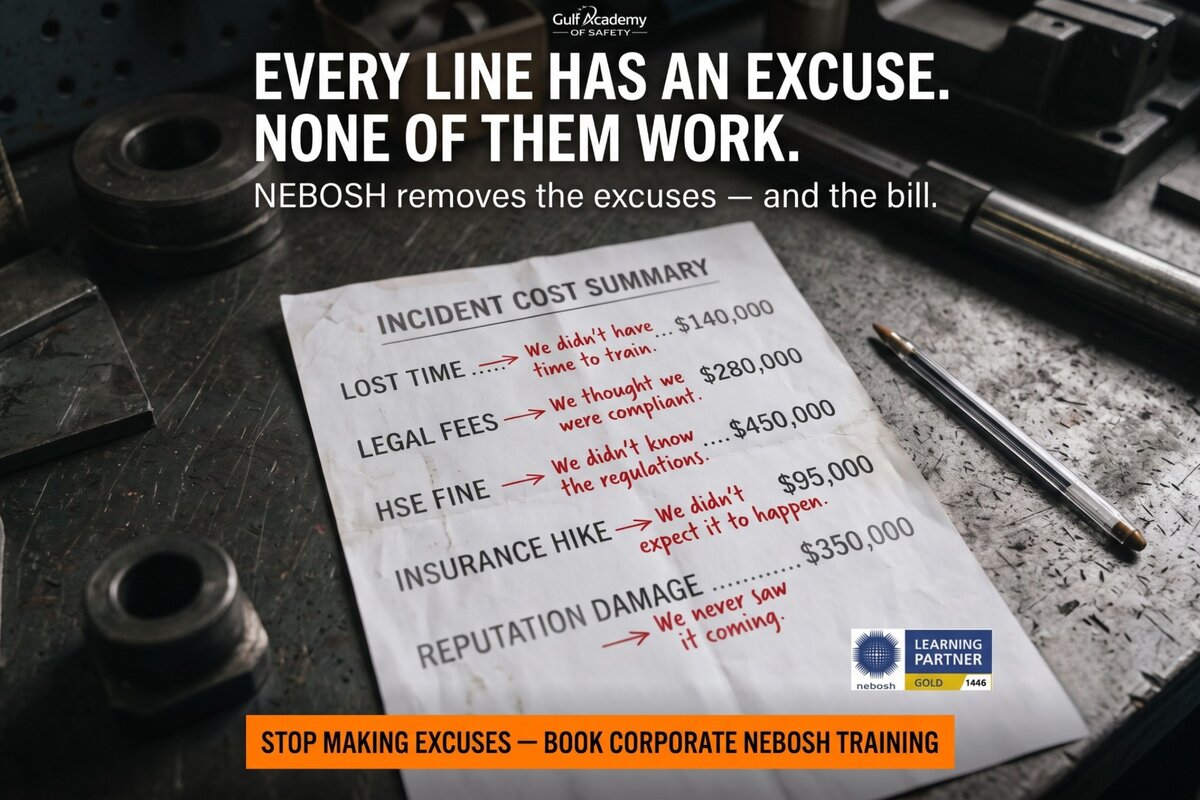
For employers in Saudi Arabia, safety is not only a legal and moral responsibility. It is also a business advantage. Accidents interrupt projects, damage equipment, harm reputations and, most importantly, hurt people. Companies that invest in trained, competent staff tend to manage risk better and win more trust from clients. This article explains how NEBOSH training can benefit organisations of different sizes and how to get the best return from a training investment.
Whether you run a construction firm, a factory, a hotel, a hospital or a logistics company, the principles are similar. People who understand hazards make better decisions, and organisations with a shared safety language communicate more effectively.
If you are considering training for your team, begin by reviewing the available NEBOSH Courses and think about which roles in your organisation need which level. A manager, a supervisor and a dedicated safety officer usually need different programmes.
Trained staff are better at spotting hazards before they cause harm. They understand why controls exist and are more likely to follow them and encourage others to do the same. Over time, this can reduce incidents, near misses and the disruption that follows them. No training can eliminate risk, but it can make a workplace noticeably safer.
Large clients and project owners in the Kingdom often examine contractors' safety arrangements during tendering and prequalification. Having staff with recognised qualifications can help demonstrate competence. It shows that your organisation takes safety seriously and has invested in capable people, which may improve your standing against competitors.
Many Saudi workplaces employ people from many nationalities and backgrounds. Misunderstandings about hazards or procedures can be dangerous. Because NEBOSH qualifications are based on international good practice, they give supervisors, engineers and safety staff a common vocabulary. When everyone uses the same terms for hazard, risk and control, communication becomes quicker and clearer.
Poorly written risk assessments are common and often unhelpful. Trained staff learn to produce clear, practical assessments that focus on real hazards and realistic controls. Better documentation also helps during audits, client reviews and incident investigations.
Investigations that stop at "worker error" miss the real causes. NEBOSH training teaches staff to look deeper at supervision, procedures, training, equipment and culture. These insights help organisations fix underlying problems rather than repeating the same incidents.
In Saudi Arabia, heat stress is a significant hazard for outdoor teams. Trained staff understand how to recognise symptoms, plan work schedules, provide shade and water and monitor vulnerable workers. This knowledge supports both worker welfare and productivity.
Employees value employers who invest in their growth. Offering recognised training can improve motivation and loyalty, particularly among ambitious supervisors and junior safety staff. A clear development path, from awareness courses to certificates and diplomas, helps you build a pipeline of internal talent.
Culture is how people behave when no one is watching. Training helps leaders understand their role in setting expectations, listening to concerns and recognising good practice. When managers demonstrate commitment, workers are more willing to report hazards and near misses.
A simple approach can help:
Ask your provider to help map the right programme to each role.
Before sending staff to training, check the NEBOSH course requirements for each level. Entry-level certificates generally do not require formal academic qualifications, but good English is important since teaching and assessment are in English. Higher-level programmes may expect relevant experience. Also plan for time away from work, assessment dates, project schedules and any fees for registration and reassessment.
The provider's quality affects your return on investment. A NEBOSH Gold Learning Partner has been recognised for meeting high standards in delivery and learner support. Gulf Academy Safety serves organisations and individuals across Saudi Arabia and aims to link training content to real workplace conditions. When choosing a partner, ask about tutor experience, group scheduling, progress reporting and whether examples can be tailored to your industry.
Training works best when it is supported afterwards. Encourage newly trained staff to apply what they have learned, such as leading inspections, reviewing risk assessments or delivering toolbox talks. Ask them to share lessons with colleagues. Set measurable goals, for example improved inspection quality, better incident reporting or fewer repeated issues, and review progress regularly.
Avoiding these mistakes helps you turn a training expense into a lasting improvement.
Investing in people is one of the most reliable ways to improve safety performance. Competent staff protect colleagues, strengthen client relationships and support long-term business success.
If you are ready to build a stronger safety team, explore the available NEBOSH Courses and choose the programmes that fit your organisation's needs in Saudi Arabia.

This post has been authored and published by one of our premium contributors, who are experts in their fields. They bring high-quality, well-researched content that adds significant value to our platform.










Student Advice provides useful education, study, career, and student life guidance to help learners make informed decisions and achieve their goals.